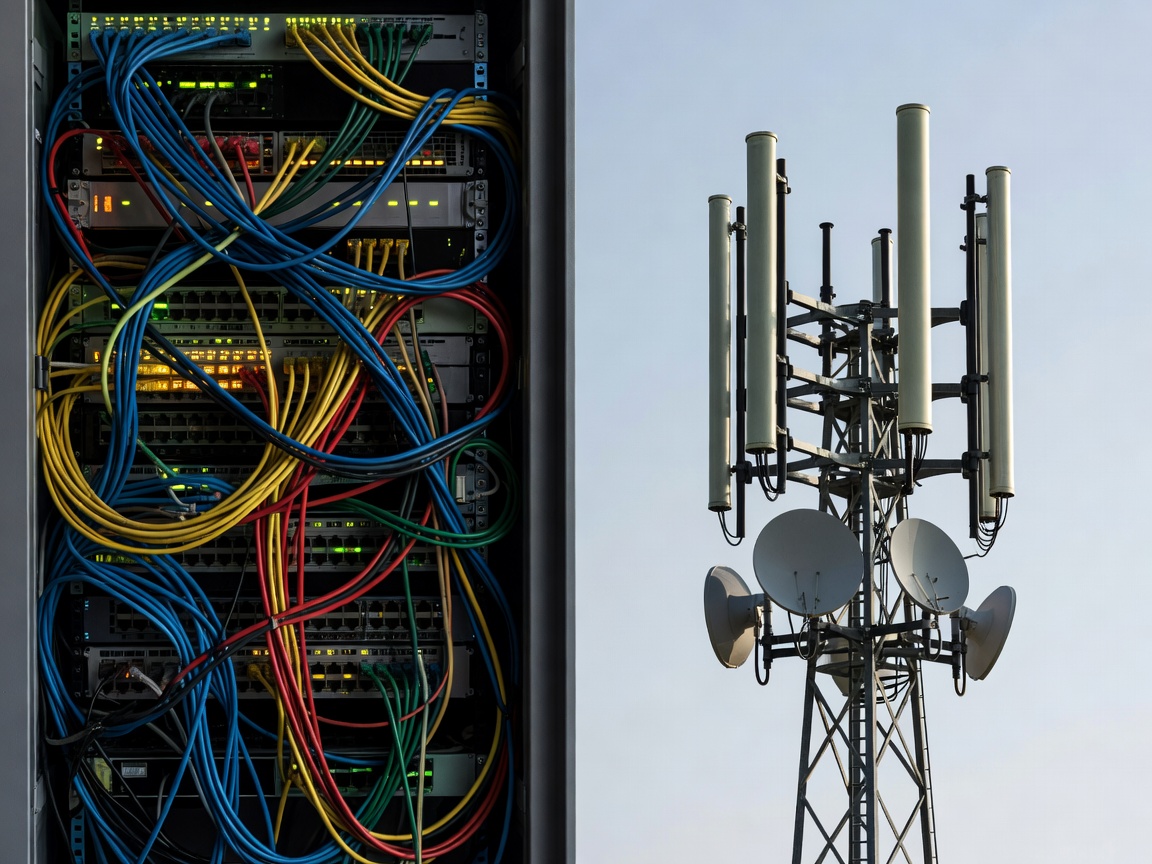
The foundational choice in any modern security deployment is deciding between wired and wireless architecture. This decision impacts not only the initial installation complexity but also long-term reliability, bandwidth consumption, and vulnerability to targeted interference.
The Fundamentals of Wired Systems
Wired security cameras—most commonly Power over Ethernet (PoE) systems—utilize a single physical cable to transmit both power and high-speed data. By connecting directly to a Network Video Recorder (NVR) or a central switch, these cameras operate independently of Wi-Fi stability.
Pros of Wired Cameras
- Absolute Reliability: Because they don't rely on radio frequencies, they are immune to Wi-Fi dropouts, bandwidth throttling, or signal degradation through thick walls.
- Consistent Video Quality: Wired systems can handle continuous 4K video streaming without compressing data as heavily as wireless counterparts.
- Security: Hardwired systems are nearly impossible to jam remotely. A physical breach of the wire is required to disrupt the signal.
Cons of Wired Cameras
- Installation Complexity: Running Ethernet cable through attics, crawlspaces, and exterior walls often requires professional installation.
- Location Restrictive: You cannot easily move a wired camera once the cable run is established.
The Appeal of Wireless Systems
Wireless cameras (often referred to as Wi-Fi cameras) transmit video data over your local wireless network. It is important to note that "wireless" typically refers to the data transmission; many wireless cameras still require a physical power cable. "Wire-free" cameras are a subcategory that operate entirely on rechargeable batteries or solar panels.
Pros of Wireless Cameras
- Deployment Flexibility: They can be placed anywhere within range of your Wi-Fi router, making them ideal for renters or historic homes where drilling is prohibited.
- Rapid Setup: Connecting a camera to a Wi-Fi network and mounting it takes mere minutes compared to hours of cable pulling.
- Smart Home Friendly: These cameras are typically designed with consumer-friendly apps and seamless smart home integrations out of the box.
Cons of Wireless Cameras
- Bandwidth Heavy: Multiple high-resolution Wi-Fi cameras can choke a home network, slowing down internet speeds for other devices.
- Interference Vulnerability: Heavy structural materials, distant router placement, or active signal jammers can disrupt the video feed.
- Battery Maintenance: If using truly wire-free models, maintaining battery charge becomes a recurring chore.
Bandwidth and Network Considerations
When selecting wireless cameras, network infrastructure is often overlooked. A single 1080p stream might consume 2-4 Mbps of upload bandwidth, but a 4K stream can demand 8-15 Mbps. If you install four wireless 4K cameras, you need robust, sustained upload speeds and an enterprise-grade mesh router to prevent network collapse.
Conversely, a wired PoE system localizes all camera traffic on its own internal network (usually via the NVR switch), keeping the camera data off your primary home Wi-Fi network completely.
Which Should You Choose?
The choice heavily depends on property ownership and security requirements. For absolute security, continuous high-resolution recording, and permanent installations, a wired PoE system is objectively superior. However, for quick deployments, apartment living, and ease of use, a high-quality wireless ecosystem offers unprecedented convenience.